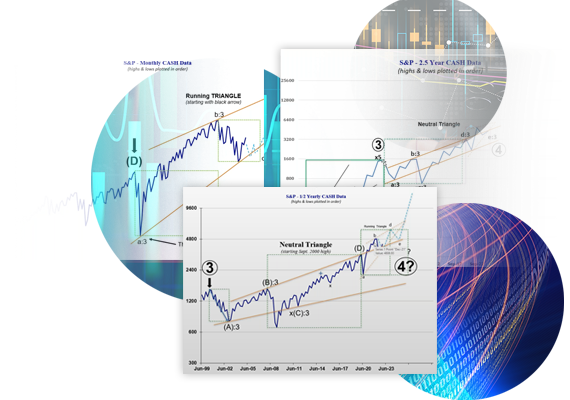
Alternation / Rule of Alternation


A principle of Elliott Wave that tells the practitioner to expect waves-2 and 4 (in an impulsive, 5-wave pattern) to be visibly different from one another. If wave-2 is simple and less time-consuming, expect wave-4 to be more complex and more time-consuming.

NEoWave Association

NEoWave expands this concept by applying alternation in 5 different ways:

  • Price (the distance covered in vertical units)
  • Time (the distance covered in horizontal units)
  • Severity (percent retracement of the preceding wave – applicable to waves-2 and 4 in an impulsive pattern)
  • Intricacy or Complexity (the number of monowaves present in a pattern)
  • Construction (one pattern may be a Flat, the other a Zigzag, etc)

In Glenn Neely's Q&A discussions, alternation is treated as a critical analytical tool rather than a loose observational guideline. For example, if one correction is sharp and simple, the next correction should be more sideways, time-consuming, and structurally complex. Glenn often emphasizes that markets seek balance between waves - alternation helps maintain that balance.

NEoWave exploits alternation to validate when a pattern is likely to complete, extend or when it might be incorrectly labeled. This creates a more objective framework than traditional Elliott Wave, where alternation is often treated as a possibility not a necessity.


LEARN MORE: